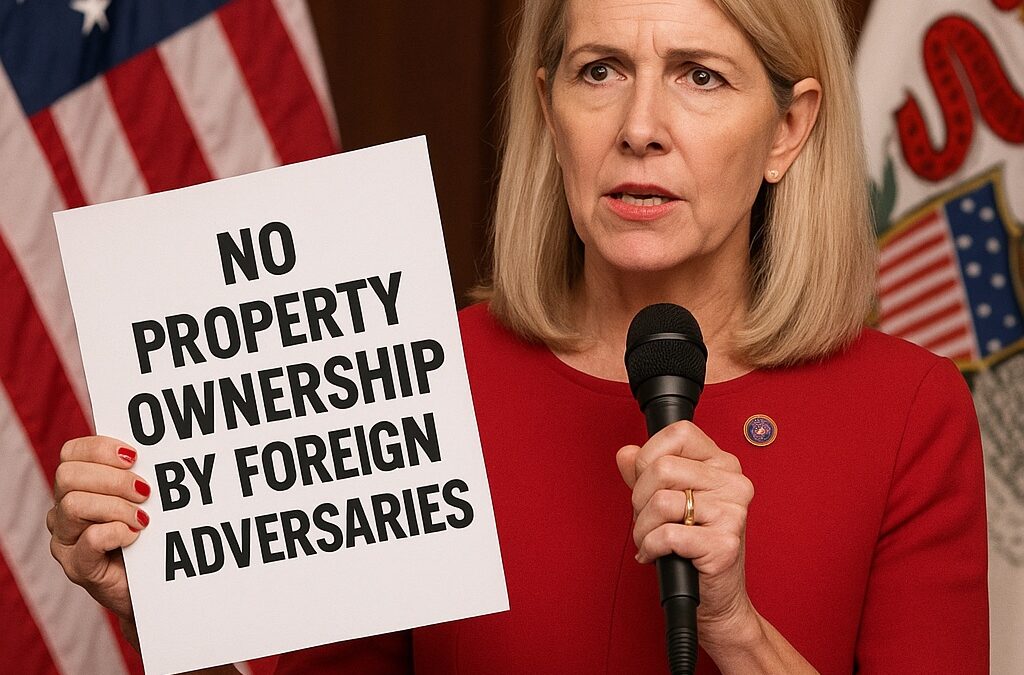
A new bill introduced by U.S. Representative Mary Miller (R-IL) has stirred intense discussions about property ownership rights and national security. The proposed legislation would prohibit Chinese nationals, companies, or entities affiliated with the Chinese Communist Party (CCP) from owning residential or agricultural property in the United States. The bill comes amid rising concerns about foreign influence on U.S. land and real estate, particularly regarding agricultural assets and strategic locations.
The bill, still in its early stages, outlines harsh penalties for violations and includes provisions that could have far-reaching impacts on foreign investment, the housing market, and property rights.
Key Provisions of the Proposed Law
-
Property Ownership Ban:
Chinese nationals, Chinese-owned companies, or any entity affiliated with the CCP would be prohibited from owning residential homes, farmland, or commercial agricultural property in the United States. -
Heavy Fines for Violations:
-
Residential property owners in violation could face fines of up to $1,000 per day.
-
Agricultural property owners could face fines of $100 per acre per day, with repeat offenders facing even harsher penalties.
-
-
Asset Seizure and Legal Action:
The bill empowers the government to seize property or assets acquired in violation of the law, and in some cases, impose criminal penalties, including imprisonment. -
Executive Authority to Expand the Ban:
The President would have the power to broaden the scope of this restriction to other foreign entities or governments if deemed a national security threat.
Why Is This Bill Being Introduced?
Proponents argue that this legislation is necessary to protect U.S. food security and prevent foreign adversaries from gaining control over critical infrastructure and farmland. Concerns have grown over reports of foreign buyers, including state-affiliated entities, purchasing large swaths of U.S. farmland near sensitive military or research facilities.
Rep. Mary Miller has emphasized that the bill is intended to safeguard American sovereignty, saying that foreign ownership of agricultural land could pose serious risks to national security and the nation’s food supply.
The Legal and Ethical Debate
While the bill is framed around national security, critics argue that it raises serious legal and constitutional questions. The language of the bill—particularly the vague definition of “CCP-affiliated entities”—has been flagged as problematic.
Legal experts warn that without clear definitions, the law could unintentionally impact Chinese-American citizens or permanent residents who have no connection to the CCP. Such broad measures could lead to lawsuits and claims of racial discrimination or violations of equal protection under the law.
Furthermore, opponents suggest that the bill could create tension with Chinese-American communities and discourage foreign investment in the U.S. housing market, potentially lowering property values in certain areas.
Impact on U.S. Property and Agriculture
-
Housing Market:
If passed, the legislation could reduce competition from foreign investors, which might make homes more affordable for local buyers in certain states. -
Agricultural Sector:
With China being one of the largest buyers of U.S. agricultural products, this law could affect trade relationships and land values, especially in rural areas. -
Economic Ripple Effects:
Foreign investment accounts for billions in U.S. real estate annually. This bill could have unintended consequences on local economies, particularly in urban hubs.
What’s Next for the Bill?
The proposal is still in committee discussions and will require approval from both the House and Senate before moving to the President’s desk. Given the current bipartisan focus on national security, the bill may gain traction, though legal challenges could slow or block its implementation.
