
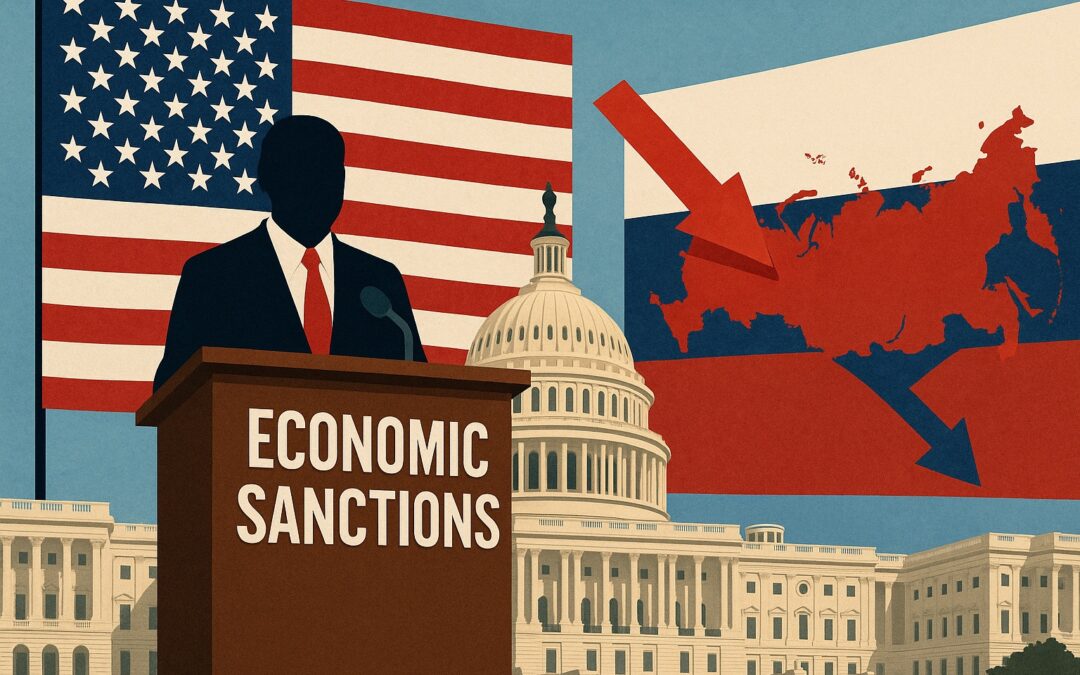
The United States Congress is stepping up its economic pressure on Russia with a bold new proposal—the Sanctioning Russia Act of 2025 (S. 1241). Introduced in the Senate by Senator Lindsey Graham (R-SC) and supported by Representative Brian Fitzpatrick (R-PA) in the House, this bipartisan bill aims to penalize Russia’s ongoing aggression in Ukraine while sending a strong signal to countries that continue to buy Russian energy and raw materials.
If enacted, this legislation would give the U.S. President sweeping authority to impose massive economic penalties—including tariffs of up to 500%—on nations that purchase Russian oil, natural gas, or uranium. The ultimate goal is to force Russia to enter peace negotiations and end its war efforts.
Key Provisions of the Sanctioning Russia Act
The bill is designed with a multi-layered approach to sanctions, giving the U.S. government new economic levers:
-
High Tariffs on Russian Energy Buyers:
Countries that continue to buy Russian oil, gas, or uranium could face severe tariffs on their imports into the United States. By targeting foreign buyers, the bill attempts to cut off Russia’s revenue streams from global trade. -
Targeting Russian Sovereign Debt:
The bill expands sanctions on Russian government bonds, making it harder for Russia to raise funds in global markets. -
Executive Authority for Additional Penalties:
The President would have the power to escalate penalties if Russia refuses to engage in peace talks or intensifies its military actions. -
Global Diplomatic Pressure:
Beyond financial penalties, the bill aims to encourage U.S. allies to join the effort. It reinforces a message that continued business with Russia comes at a high cost.
Why This Bill Matters
The Sanctioning Russia Act reflects a strategic shift in U.S. foreign policy. Rather than targeting Russia alone, it places pressure on third-party countries that indirectly fund Russia’s war machine by purchasing its energy resources.
For example, nations heavily dependent on Russian oil or natural gas could see tariffs or restrictions on exports to the U.S. if they fail to reduce their reliance. This approach is intended to weaken Russia’s economy, which relies heavily on energy exports, while simultaneously tightening global unity against its actions in Ukraine.
Potential Impacts
-
Energy Prices:
If foreign buyers reduce their purchases of Russian energy, global supply chains could tighten, potentially increasing the price of oil and natural gas worldwide. U.S. consumers might see higher energy prices as a result. -
Diplomatic Tensions:
Countries that maintain strong economic ties with Russia—such as India or some European nations—could find themselves caught between U.S. trade penalties and their own energy needs. This could strain diplomatic relationships. -
Boost for Alternative Energy:
The bill may indirectly accelerate the global shift toward renewable energy or U.S.-friendly energy suppliers, as nations seek alternatives to Russian oil and uranium. -
Nuclear Energy Supply:
Because uranium is included, the legislation could also affect global nuclear energy supply chains, which rely on a steady flow of fuel.
Bipartisan Support and Political Momentum
The bill’s bipartisan nature—introduced by lawmakers from both major parties—gives it a strong chance of advancing. Supporters argue that cutting off Russia’s financial lifelines is one of the most effective ways to force a diplomatic solution.
However, critics warn of unintended consequences, such as escalating economic tensions with neutral countries or pushing Russia closer to alternative markets like China.
What Happens Next?
The Sanctioning Russia Act is currently under review in the Senate. If it passes both chambers of Congress, President Trump would have the authority to sign it into law or veto it. Given his administration’s tough stance on Russia’s aggression, a signature is highly likely if the bill reaches his desk.
